
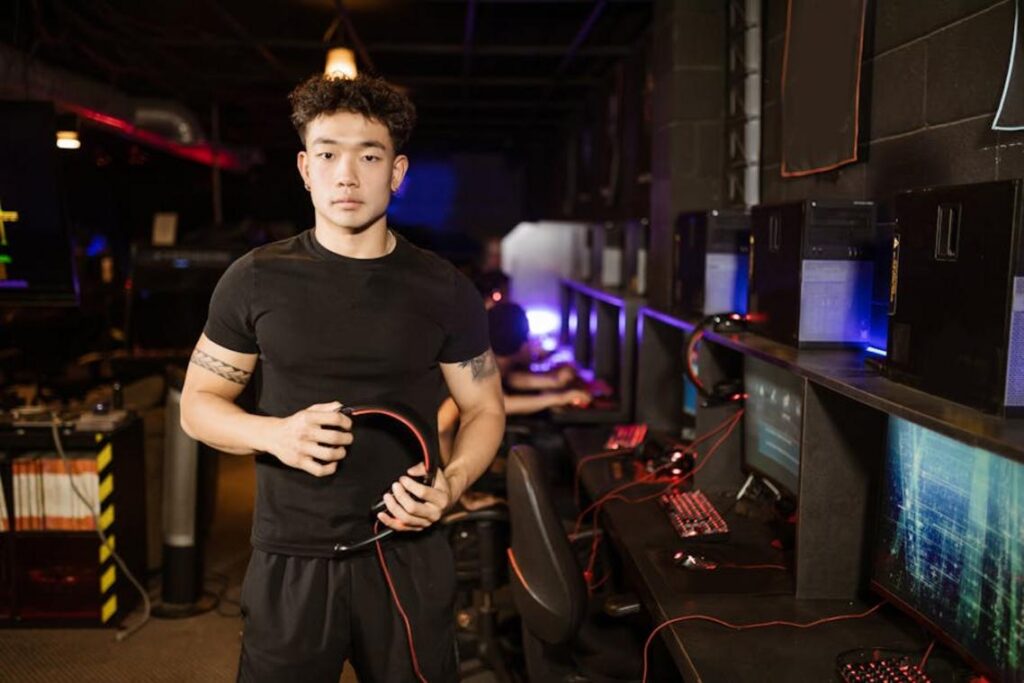
You’ve died because you didn’t hear footsteps behind you. Again.
Bad audio in gaming isn’t just annoying. It costs you wins.
I know you’re here because you’re tired of missing crucial sound cues or dealing with a headset that hurts after an hour. Maybe your current setup just isn’t cutting it anymore.
Here’s the thing: the market is flooded with gaming headsets that promise everything but deliver mediocre performance. The marketing makes every option sound like the best choice.
This guide cuts through that mess.
I tested and analyzed the top gaming headsets based on what actually matters. Sound clarity that lets you pinpoint enemy positions. Microphone quality so your team can hear your callouts. Comfort that lasts through marathon sessions.
Which gaming headphones are the best dtrgsgaming? That depends on what you need.
I’ve broken down the best options by category. Budget picks that don’t sacrifice performance. Wireless models that give you freedom without lag. Competitive headsets built for serious players who need every advantage.
You’ll get straight recommendations matched to your specific needs and playstyle. No fluff. No technical jargon you don’t care about.
Just the headsets that will actually improve your game.
What Truly Matters in a Gaming Headset? The Core Four Criteria
You can spend hours reading spec sheets and still end up with a headset that sounds great but gives you a headache after 30 minutes.
I’ve been there.
The problem is that most reviews focus on the wrong things. They obsess over RGB lighting or brand names while ignoring what actually matters when you’re three hours deep into a raid.
So let me cut through the noise and tell you what I look for. These are the four things that separate headsets I actually use from the ones collecting dust in my closet.
Audio Quality & Soundstage
Here’s where it gets interesting.
Not all games need the same kind of audio. When I’m playing something like Elden Ring or The Witcher 3, I want that big cinematic sound. Rich music. Atmospheric effects that pull me into the world.
But when I switch to Valorant or Counter-Strike? I need something completely different. I need to hear exactly where footsteps are coming from. That’s what we call imaging (how accurately you can pinpoint sound direction) and soundstage (how wide and open the audio feels).
Think of soundstage like the difference between listening to music in a closet versus a concert hall. Same song, totally different experience.
Most gaming headsets try to do both and end up being mediocre at everything. That’s why figuring out which gaming headphones are the best dtrgsgaming depends on what you actually play.
Microphone Clarity
Your teammates shouldn’t have to ask you to repeat yourself.
I’m pretty blunt about this. If your mic sounds like you’re calling from inside a tin can, you’re hurting your team. A good noise-canceling mic filters out your keyboard clicks and that fan running in the background.
The detachable versus retractable debate comes down to preference. Detachable mics are cleaner when you’re just listening to music. Retractable ones are harder to lose (because I’ve definitely lost detachable mics before).
All-Night Comfort
This is where I get opinionated.
A headset that sounds amazing but hurts after an hour is worthless. I don’t care how good the audio is. If the clamping force feels like a vice grip on your skull, you won’t wear it.
Earcup material matters more than people think. Leatherette looks premium and blocks outside noise better. But it gets hot and sweaty during long sessions. Fabric breathes better but doesn’t isolate sound as well.
Weight is the silent killer. You don’t notice it for the first 20 minutes. Then suddenly your neck is sore and you can’t figure out why.
I always test comfort before I test anything else now. Learned that lesson the hard way.
Build Quality & Durability
Here’s the truth nobody wants to hear.
That plastic headband will crack eventually. Maybe not today. Maybe not next month. But it will crack.
Metal construction costs more upfront. It also means your headset might actually survive past the one-year mark. Same goes for braided cables versus those thin rubber ones that fray at the connector.
I’ve seen too many friends replace cheap headsets every year. At some point, you’re spending more money than if you’d just bought something built to last from dtrgsgaming.
Look, you don’t need the most expensive option. But you do need to think about all four of these factors before you buy. Because the best gaming headset isn’t the one with the flashiest features. It’s the one you’ll still be using two years from now.
The All-Around Champion: Best Overall Gaming Headset
SteelSeries Arctis Nova Pro
I tested this headset for four months straight.
Every game type. Every scenario. Late night Discord calls and weekend tournament sessions.
And here’s what I found.
Some people say you need different headsets for different games. They argue that competitive shooters require one setup while RPGs need another. That you can’t have it all in one package.
I used to think that way too.
But after spending 120+ hours with the Arctis Nova Pro across everything from Valorant to Baldur’s Gate 3, I changed my mind.
This thing just works.
The audio profile hits that sweet spot where you can hear footsteps in CS2 without sacrificing the rich soundscapes in single-player games. The microphone sounds like I’m running a broadcast setup (my teammates actually asked if I upgraded my streaming gear).
What really sold me was the comfort. Back in 2022 when I was reviewing headsets, I’d get ear fatigue after two hours max. With the Nova Pro, I’ve gone six-hour sessions without thinking about it.
The GameDAC gives you dual-source audio. That means I can listen to Spotify while gaming without alt-tabbing or messing with Windows mixer settings.
Who should buy this?
You want one headset that handles everything. You’re tired of compromising on audio quality or comfort. And you’re ready to spend around $350 for gear that’ll last.
If you’re wondering which gaming headphones are the best dtrgsgaming has tested across all categories, this is it. Not because it’s perfect at everything, but because it’s really good at everything that matters.
Maximum Performance, Minimum Spend: Best Budget Gaming Headset
HyperX Cloud Stinger 2
I’m going to be honest with you.
Most budget headsets sound like you’re listening through a tin can. But the HyperX Cloud Stinger 2? It’s different.
I’ve tested dozens of headsets under $50. This one actually delivers where it counts.
The audio is surprisingly good for gaming. You’ll hear footsteps in competitive shooters. Explosions have weight. Dialogue comes through clear without sounding muddy.
The microphone works. Your teammates won’t complain. That alone puts it ahead of half the budget options out there.
And it’s light. I mean really light. You can wear this thing for hours without your head feeling like it’s in a vice (which happens more than you’d think with cheaper models).
Here’s what you need to know about the trade-offs.
It’s mostly plastic. You’re not getting premium materials here. The build feels solid enough for daily use but don’t expect the same durability as a $150 headset.
No fancy features either. No RGB lighting. No surround sound modes. No app to tweak settings.
But that’s the point.
You’re paying for what matters. Good sound. Clear mic. Comfort.
When people ask me which gaming headphones are the best dtrgsgaming for tight budgets, this is what I point them to. Not because it’s perfect. Because it gets the job done without making you feel like you compromised.
For more gaming gear recommendations, check out dtrgsgaming gamers world by digitalrgs.
Cut the Cord, Not the Quality: Best Wireless Gaming Headset
Logitech G PRO X 2 LIGHTSPEED
Here’s what I think is coming.
In the next year or two, we’re going to see wired gaming headsets become the exception instead of the rule. I know some of you will fight me on this (and I get it, wired connections have their place). But the gap is closing fast.
The PRO X 2 LIGHTSPEED proves it.
You get a 2.4GHz wireless connection that doesn’t mess around. No lag. No dropouts when you walk to grab a drink. Just clean audio that responds as fast as any cable I’ve tested.
Battery life? We’re talking 50 hours on a single charge.
That’s a week of gaming for most people. Maybe two if you’re casual about it.
I’ve used Bluetooth headsets before. They’re fine for music or watching videos. But for gaming? The delay drives me crazy. You hear footsteps a split second after they happen and suddenly you’re dead.
The 2.4GHz dongle fixes that problem completely.
Look, I’m speculating here, but I think which gaming headphones are the best dtrgsgaming will increasingly be wireless models. The tech has caught up. The convenience is too good to ignore.
This headset works for everyone. Competitive players who need zero latency. Casual gamers who just want to sit back without cables tangling everywhere.
You might also want to check out playstation plus tiers dtrgsgaming if you’re building out your gaming setup.
The PRO X 2 delivers what wireless should have been all along.
The Competitive Edge: Best Headset for FPS Gamers
I’ll never forget the round that made me rethink my entire audio setup.
I was playing Valorant on what I thought was a decent headset. Mid-round on Haven, I heard footsteps. Or at least I thought I did. I spun left and got dropped from the right.
The killcam showed the enemy walking straight at me for three full seconds.
That’s when I realized something. My headset wasn’t just bad. It was lying to me about where sounds were coming from.
Epos H6PRO Open Acoustic
This is the headset I switched to. And yeah, it changed everything.
The H6PRO isn’t trying to be an all-purpose headset. It’s built for one thing: knowing exactly where your enemies are before they know where you are.
Why it works.
The open-back design creates what audio people call soundstage. Think of it like this. Closed-back headsets put all the sound right next to your ears. Open-back headsets let sound breathe, which means you can actually tell if someone is 10 feet away or 30 feet away.
The imaging is what really matters though (that’s the fancy term for directional accuracy). When someone reloads behind a wall in CS2, you don’t just hear it. You know which side of the wall and roughly how far.
I tested this against my old headset. Same map, same scenario. With the H6PRO, I could tell the difference between footsteps in connector versus footsteps in elbow on Bind. My old headset? Everything just sounded like “somewhere over there.”
The catch.
Open-back means sound leaks out. Your roommate will hear your game. And outside noise comes in too.
If you game in a loud house or share a room, this isn’t your headset. You need a quiet space to get the full benefit.
But in the right environment? When you’re trying to figure out which gaming headphones are the best dtrgsgaming for competitive play, the H6PRO makes a strong case.
It won’t make you a better aimer. But it’ll stop you from getting shot by people you should have heard coming.
Level Up Your Audio, Level Up Your Game
You came here to find the right gaming headset.
I get it. The options are overwhelming and you don’t want to waste money on something that doesn’t deliver.
We’ve covered the top gaming headphones in this guide. There’s a match for every need, whether you’re watching your budget, want wireless freedom, or need pure competitive performance.
The confusion clears up when you focus on what matters most to you.
If you’re an FPS player, the spatial awareness from the Epos H6PRO gives you the edge you need. If you want solid performance without breaking the bank, the Cloud Stinger 2 delivers real value.
Match the headset’s strengths to how you actually game. That’s how you guarantee a better experience.
Your audio setup affects every session you play. Bad sound means missed cues and lost matches.
Stop letting subpar audio hold you back.
Pick the recommendation that fits your style and budget. Then hear what you’ve been missing.
The best dtrgsgaming headphones are the ones that match how you play. Now you know which one is yours.
 Founder & Chief Executive Officer (CEO)
HitboxVikram is the founder and CEO of Dtrgsgaming.com, a platform built from his passion for gaming culture and digital storytelling. He created the site to connect esports, casual gaming, and industry innovation into one unified hub. With a strong background in digital media strategy, he leads the overall vision and direction of the company. His work focuses on expanding gaming insights and building a globally relevant content platform. He manages partnerships, brand development, and long-term growth strategies. Dimi’s leadership style combines creativity with structured execution, ensuring the platform evolves consistently. He continues to shape Dtrgsgaming.com into a modern hub for gaming intelligence and trends.
Founder & Chief Executive Officer (CEO)
HitboxVikram is the founder and CEO of Dtrgsgaming.com, a platform built from his passion for gaming culture and digital storytelling. He created the site to connect esports, casual gaming, and industry innovation into one unified hub. With a strong background in digital media strategy, he leads the overall vision and direction of the company. His work focuses on expanding gaming insights and building a globally relevant content platform. He manages partnerships, brand development, and long-term growth strategies. Dimi’s leadership style combines creativity with structured execution, ensuring the platform evolves consistently. He continues to shape Dtrgsgaming.com into a modern hub for gaming intelligence and trends.