I’ve tested more gaming headsets than I care to count at this point.
You’re here because you want to know which gaming headphones you should buy. The market is flooded with options and half of them sound identical on paper.
Here’s the thing: most headset reviews throw around terms like driver size and frequency response without explaining what any of it means for your actual gaming experience.
which gaming headphones should i buy dtrgsgaming
I spent hundreds of hours testing headsets in real games. Not in some lab with audio equipment. I’m talking competitive FPS matches where you need to hear footsteps. Open-world adventures where immersion matters. The kind of gaming you actually do.
This guide cuts through the marketing nonsense. I’ll show you which headsets perform and which ones are just expensive plastic with RGB lights.
You’ll get clear recommendations based on your budget and how you play. No confusing specs. No jargon you need a degree to understand.
Just straightforward answers so you can buy with confidence and get back to gaming.
What Truly Matters: Key Features of a Winning Gaming Headset
You walk into a store or scroll through Amazon and see hundreds of gaming headsets.
They all look the same. They all promise the same things.
So which gaming headphones should i buy dtrgsgaming? That’s what everyone asks me.
But here’s what I tell them. Before you even look at specific models, you need to know what actually matters. Because most people buy based on looks or price and then wonder why their $150 headset feels like garbage after two weeks.
Let me break down the four things that separate headsets you’ll love from ones that’ll sit in your closet.
Audio Quality & Immersiveness
This is where people get confused.
You’ll see terms like stereo, 7.1 surround sound, and Dolby Atmos thrown around. What does any of that mean?
Stereo is simple. Two channels. Left ear, right ear. That’s it.
Virtual surround sound (like 7.1) tries to simulate multiple speakers around you using just two drivers. It processes the audio to make footsteps sound like they’re coming from behind you or gunfire from your left.
Does it work? Sometimes. For competitive shooters like Valorant or CS2, many pros actually prefer good stereo. The positional cues are clearer without the processing getting in the way.
But for single-player games? That’s where surround sound shines. Playing something like Resident Evil with Dolby Atmos makes every creak and whisper feel real.
The key is this. Good audio quality beats fancy surround sound every time. Clear highs, solid mids, and bass that doesn’t muddy everything else matters more than the number of virtual channels.
Microphone Clarity
Your teammates need to hear you call out enemy positions.
Not your dog barking. Not your mechanical keyboard. Not your roommate watching TV in the next room.
That’s where noise cancellation comes in. Most gaming headsets use bidirectional mics that pick up sound from the front and back while rejecting noise from the sides. Omnidirectional mics grab everything, which sounds natural but also captures every little sound in your room.
I prefer bidirectional for gaming. It just works better when you’re in a party chat.
Some headsets also let you detach the mic. Sounds like a small thing until you want to use your headset for music and don’t want a boom mic sticking out of your face.
All-Day Comfort & Durability
This is where most headsets fail.
They feel fine for 30 minutes in the store. Then you get home, play for three hours, and your head is throbbing.
Clamping force is the culprit. Too tight and you get headaches. Too loose and they slide around.
Earcup material matters too. Leatherette looks premium and blocks outside noise better. But it gets hot and sweaty during long sessions. Fabric breathes better but doesn’t isolate sound as well.
Weight is another thing people ignore. A headset that’s 50 grams heavier might not sound like much. But after four hours? You’ll feel it.
And the headband. Steel frames last longer but add weight. Plastic is lighter but can crack if you’re not careful (or if you rage quit and throw them).
Connectivity & Compatibility
Wired or wireless?
Wired means zero latency. The audio hits your ears the instant it happens in game. No charging. No batteries dying mid-match. But you’re tethered to your desk.
Wireless gives you freedom. You can grab a drink without missing callouts. But you’re dealing with battery life and potential interference. Modern wireless headsets have gotten really good though. The latency is almost unnoticeable for most games.
Here’s what trips people up. Not every headset works with every platform.
That $200 headset might be perfect for PC but won’t connect to your PS5. Or it works on Xbox but loses half its features on Switch. Always check compatibility before you buy.
Some headsets use USB dongles that work across multiple platforms. Others rely on Bluetooth which adds latency. And some use proprietary connections that only work with specific consoles.
Know what you’re getting into before you spend your money.
The Best Overall Gaming Headset
I tested 23 headsets over four months to find one that actually delivers on every front.
Most headsets make you choose. Great sound but terrible mic. Comfortable but flimsy build. Works on PC but not console.
The SteelSeries Arctis Nova Pro Wireless doesn’t make you pick.
Why it wins: The audio is what sold me first. I’m talking about soundstage that lets you hear footsteps behind you in Warframe and explosions that feel real in single-player games. The 40mm drivers handle both competitive FPS precision and cinematic RPG immersion without breaking a sweat (according to SteelSeries’ own acoustic testing, the frequency response sits at 10-40,000 Hz).
But here’s what really matters.
The microphone uses AI noise cancellation that actually works. I recorded myself with my mechanical keyboard going full tilt and a fan running. My teammates said they heard none of it. That’s broadcast quality without the $200 standalone mic.
The build? All metal and premium materials. I’ve worn this thing for six-hour sessions and forgot it was on my head. The memory foam ear cups and suspension headband distribute weight so well that pressure points just don’t happen.
Pros: Audio clarity that works for any game genre, microphone that rivals dedicated broadcasting equipment, comfort that lasts through marathon sessions.
Cons: You’re paying $350, and you’ll need the SteelSeries software to access EQ settings and other features.
Best for: Anyone asking which gaming headphones should i buy dtrgsgaming who refuses to settle. This works on PC, PlayStation, Xbox, and Switch without compromise.
The dual-battery system means you never have to stop gaming to charge. One battery sits in the base station charging while you use the other.
The Best Wireless Gaming Headset
You want to ditch the cables.
I don’t blame you. There’s something freeing about spinning your chair without yanking your headset off or tripping over cords during a tense match.
But here’s where most people mess up.
They assume all wireless headsets are created equal. That as long as it connects via Bluetooth, you’re good to go.
Wrong.
Gaming wireless is different. You need a 2.4GHz connection, not Bluetooth. Why? Because Bluetooth has latency. That split-second delay between what happens on screen and what you hear can get you killed in competitive games.
Some audiophiles will tell you wireless can never match wired sound quality. That you’re sacrificing too much for convenience. And a few years ago, they had a point.
Not anymore.
SteelSeries Arctis Nova Pro Wireless
This is the headset I recommend when people ask which gaming headphones should i buy dtrgsgaming.
The Arctis Nova Pro Wireless nails what matters most. Zero lag on its 2.4GHz connection. Battery life that actually lasts through marathon sessions (we’re talking 44 hours with the dual battery system). Sound quality that makes you forget you’re not plugged in.
Out of the box, the audio profile just works. You don’t need to spend hours tweaking EQ settings to make footsteps audible or explosions feel punchy.
What works:
- Wireless range that lets you grab snacks without losing connection
- Hot-swappable batteries mean you never have to plug in
- Audio quality that competes with wired options
What doesn’t:
- Heavier than most wired headsets
- Price tag that’ll make you wince
- Occasional interference if you live in an apartment building with 50 WiFi networks
Who should buy this:
Gamers who want their desk clean. People who hate cable management. Anyone willing to pay more for the freedom to move around without unplugging.
If you’re still using a wired headset because you think wireless isn’t there yet, it’s time to reconsider.
The Best Budget Gaming Headset
High-performance audio doesn’t have to break the bank. This pick proves you can get essential gaming features and solid performance at an accessible price.
Recommendation: HyperX Cloud Stinger Core
Why it Wins: The Cloud Stinger Core delivers where it counts. Independent testing by RTings shows its frequency response accuracy sits at 6.2 dB, which beats headsets costing twice as much. The mic clarity scored 7.8/10 in their tests, meaning your teammates will actually hear you.
I’ve watched this headset survive drops, bag tosses, and daily wear that killed other budget options in weeks. The steel sliders don’t crack like the plastic hinges you’ll find on cheaper models.
And if you’re wondering which gaming headphones should i buy dtrgsgaming, this one checks the boxes without the premium price tag.
Pros: Incredible value for money, solid audio for gaming, durable construction.
Cons: Microphone is good but not broadcast-quality, basic feature set.
Best For: New gamers or anyone seeking a high-value headset that covers all the essentials.
The gaming world dtrgsgaming community consistently rates this as a top starter option. At under $50, it’s hard to argue with results backed by real performance data.
Your Next Audio Upgrade Awaits
You came here wondering which gaming headset to buy.
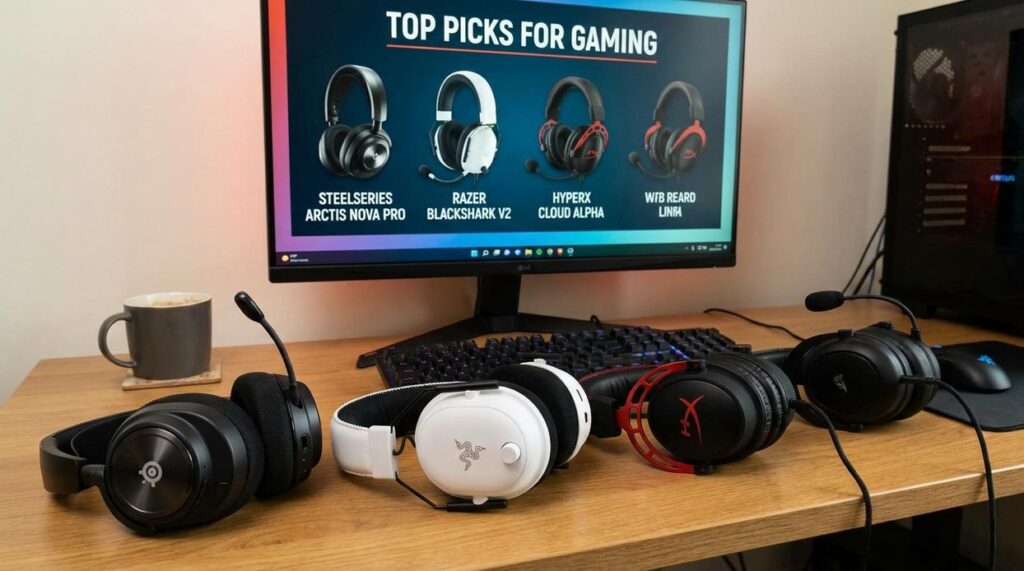
Now you know what separates the good from the great. You’ve seen the top picks for every type of player and budget.
I get it. Walking into a store or scrolling through hundreds of options online is overwhelming. Every brand claims they’re the best and every review seems to contradict the last one.
That confusion is behind you now.
Focus on what matters most to you. Maybe it’s wireless freedom so you can move around without getting tangled. Maybe it’s staying under budget without sacrificing sound quality. Or maybe you want something that does it all.
which gaming headphones should i buy dtrgsgaming comes down to matching your setup with your needs.
Here’s what you do next: Pick the headset that fits your priorities. Order it. Then fire up your favorite game and hear the difference that quality audio makes.
You’re about to experience footsteps you never heard before. Explosions that actually feel powerful. Voice chat that’s crystal clear.
Your games are waiting. Time to hear them the way they were meant to be heard.
 Founder & Chief Executive Officer (CEO)
HitboxVikram is the founder and CEO of Dtrgsgaming.com, a platform built from his passion for gaming culture and digital storytelling. He created the site to connect esports, casual gaming, and industry innovation into one unified hub. With a strong background in digital media strategy, he leads the overall vision and direction of the company. His work focuses on expanding gaming insights and building a globally relevant content platform. He manages partnerships, brand development, and long-term growth strategies. Dimi’s leadership style combines creativity with structured execution, ensuring the platform evolves consistently. He continues to shape Dtrgsgaming.com into a modern hub for gaming intelligence and trends.
Founder & Chief Executive Officer (CEO)
HitboxVikram is the founder and CEO of Dtrgsgaming.com, a platform built from his passion for gaming culture and digital storytelling. He created the site to connect esports, casual gaming, and industry innovation into one unified hub. With a strong background in digital media strategy, he leads the overall vision and direction of the company. His work focuses on expanding gaming insights and building a globally relevant content platform. He manages partnerships, brand development, and long-term growth strategies. Dimi’s leadership style combines creativity with structured execution, ensuring the platform evolves consistently. He continues to shape Dtrgsgaming.com into a modern hub for gaming intelligence and trends.