Music can make or break a gaming experience. Think about it. You’re battling a boss, and that epic score heightens the tension.
Without it, something feels off. Many aspiring creators and gamers get lost in where to start with game soundtrack design. I get it.
It can be overwhelming.
I’ve spent years digging into the core elements of gaming, like storytelling and immersion. I know what works and what doesn’t. This article will break down complex concepts into easy steps.
You won’t just learn about notes and rhythms. I’ll equip you with foundational knowledge and practical strategies to craft your own compelling game scores.
By the end, you’ll have the tools and confidence to dive into composition. Let’s demystify this process together and get you on track to create unforgettable soundscapes. This journey is yours to take, and I’m here to guide you every step of the way.
The Heartbeat of Gaming: What Makes Video Game Music Unique?
Video game music isn’t your typical film score. It’s interactive and non-linear, playing a key role in game soundtrack design. Ever noticed how a game’s music shifts as you make decisions?
That’s the magic of changing changes. It enhances immersion, guiding your emotions and reinforcing narratives.
Unlike films, game music often loops. It adapts to player actions, creating a smooth experience. Remember the haunting themes of Silent Hill?
Those leitmotifs stick with you, defining characters and places. They don’t just fill silence. They’re part of the story.
Take The Legend of Zelda. Its music isn’t just background noise. It’s a call to adventure, pushing you to explore.
And when tension rises, so does the tempo. You feel every heartbeat, every impending battle. That’s the beauty of game music.
Pro tip: Next time you play, pay attention to how the music changes with your actions. It’s like having a personal orchestra. Speaking of learning gaming techniques, check out speedrunning fundamentals start to improve your gameplay.
In gaming, music isn’t just heard. It’s felt. It makes worlds come alive, and players believe they’re heroes.
That’s why video game music is truly unique.
Unleashing the Sound of Games: Core Principles
When it comes to game soundtrack design, it’s all about the heart. Melody, harmony, rhythm, and timbre are like the game’s emotional backbone. Melody is the catchy tune you hum long after playing.
Leitmotifs are a game-changer. These short musical themes for characters or places make narratives unforgettable. Remember the first time you heard a certain theme and knew a character was about to appear?
It sticks. Harmony supports melody, giving it depth and mood. Rhythm drives the action, keeping players engaged (imagine) a boss fight without it!
That’s the power of a leitmotif. It binds the story together.
Changing scoring? It’s like the magic trick of game composing. Music adapts to what’s happening in the game.
It’s alive. Whether it’s layering sounds to build tension or using horizontal re-sequencing for smooth transitions, changing scores keep players on their toes.
Matching mood and genre to the game’s world is key. A sci-fi game with eerie music? Perfect.
A fantasy world with medieval tunes? Yes, please. A horror game with chilling whispers?
Important. The soundtrack must breathe with the visuals and narrative. That’s how you craft an immersive experience.
Your Composer’s Toolkit: Important Software & Instruments
Let’s talk about your composer’s toolkit. What do you really need? A computer, obviously.
It’s the heartbeat of your setup. But don’t forget the audio interface. It connects the dots between your gear and your digital world.
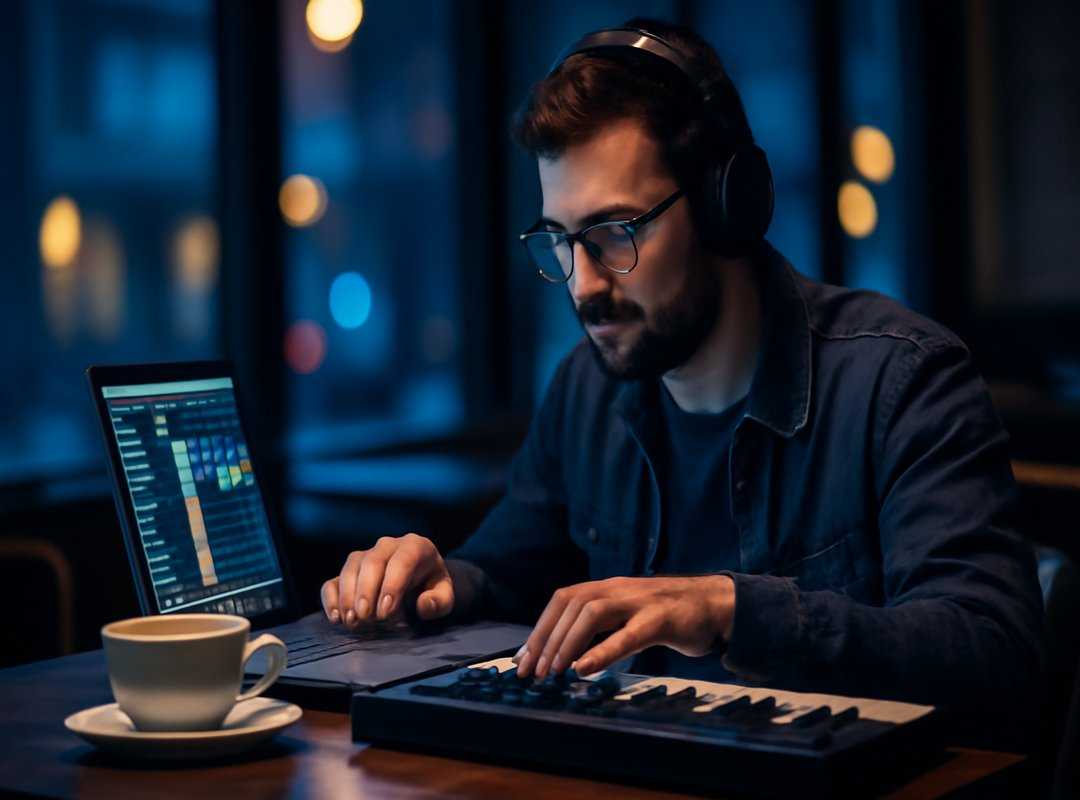
A MIDI keyboard or controller? That’s your hands in the digital area. And, of course, quality headphones or monitors are non-negotiable.
Now, Digital Audio Workstations, or DAWs, are your playground. Think GarageBand, FL Studio, Ableton Live Lite, and Reaper. These are accessible, offering a range of features.
Beginners often love GarageBand for its simplicity, while FL Studio is great for its flexibility. Reaper? It’s affordable and customizable.
Virtual Studio Technology (VST) instruments are the secret sauce. They provide the sounds you need (be) it orchestral or synth. And yes, there are budget-friendly options if cash is tight.
Sound design plays a big role in music composition too. It’s about more than just notes and melodies. Sound effects can complement your musical score, adding depth and dimension.
And speaking of layers and texture, if you’re into creating pixel art characters, you’ll find it adds another artistic avenue to explore alongside game soundtrack design.
Crafting Game Soundtracks: Techniques for Immersion
When diving into game soundtrack design, you’ve got to start by understanding the game’s core. I mean, really analyze that concept. Identify those key moments players will remember.
Next up, tailoring music to different game states is key. For exploration, I prefer subtle themes that leave space for discovery. Combat?
These are your musical anchors. Without them, the whole thing falls flat.
Amp it up. Players need that adrenaline rush. Puzzles and menus, though, require a calm, focused vibe.
And don’t forget those cutscenes. They’re like mini movies.
Creating smooth loops and transitions is another beast entirely. It’s all about flow. You don’t want jarring cuts that yank players out of the game world.
Loops should feel like they could go on forever (without anyone noticing).
Collaboration? A must. Work with developers closely to align the music with their vision.
Tools like FMOD or Wwise are your best friends here. They help integrate music effectively into the game engine. Plus, they’re part of the important composition tips and software for creating.
Remember, great game music isn’t just heard; it’s felt. That’s what keeps players coming back.
Overcoming the Boss Battle: Common Challenges & Pro Tips
Game soundtrack design is like wrestling a bear with a baton. It’s tough, but not impossible. Writer’s block?
We’ve all been there. Staring at a blank staff, wondering if the notes will ever come. But guess what?
They will. You just need to keep at it. Consistent practice is your best friend.
And about those technical hurdles with software? They’re just puzzles waiting to be solved. Dive into tutorials, and don’t be afraid to ask around.
It’s not cheating; it’s smart. Balance repetition with freshness by mixing up your melodies. Iteration and experimentation are key.
Achieving a professional sound is another beast. But here’s a pro tip: study existing game scores. Learning basic music theory helps too.
Try different approaches, and don’t fear the eraser. Sometimes, the best ideas come from revisions.
Looking for more resources? You’re in luck. The internet’s bursting with online tutorials, communities, and courses specific to video game music composition.
Join one. Engage. Get feedback.
It’s not just about learning; it’s about connecting with others who share your passion. In the end, the battle is won with persistence and creativity. So, pick up that baton and face the music.
Your Next Steps in Game Music Creation
You’ve got the tools and principles to tackle game soundtrack design head-on. The complexity that once felt overwhelming? It’s manageable now.
So what’s next? Start experimenting with your own music compositions. Share your work with others and invite feedback.
Engage with the gaming community for fresh ideas and collaboration.
Get out there and make some noise. Your journey is just beginning.
Don’t wait. Dive in today and start crafting those epic soundscapes. Your game deserves it.
If you need help, reach out. The world of game audio is waiting for you.
 Creative Strategist & Narrative Director